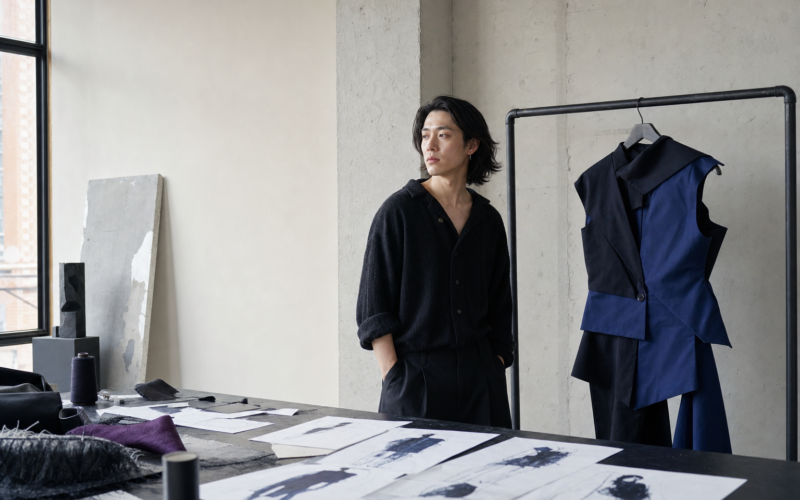
Fashion is creativity.
It is also contracts, intellectual property, negotiations, taxes, employment, licensing, ownership, partnerships, insurance, financing and business strategy.
Behind every collection, campaign, photoshoot, modeling agreement, fashion label and manufacturing relationship are business and legal decisions. Yet many people enter the industry knowing how to create without fully understanding how to protect, structure or commercialize what they create.
A designer may choose a name without checking whether similar trademarks already exist. A photographer may create an image without clearly establishing ownership or usage rights. A model may sign an agreement without understanding how their image can be used. A startup may form an LLC without understanding its obligations. A brand collaboration may begin without clearly defining who owns the resulting intellectual property.
Artificial intelligence is adding another layer of questions involving authorship, ownership, likeness, data, content and commercial use.
Fashion 4Eleven Fashion Law & Business exists to help readers understand the business and legal issues that shape creative careers and companies.
EDUCATIONAL INFORMATION — NOT LEGAL, TAX OR FINANCIAL ADVICE
Fashion 4Eleven provides general educational and informational content. Nothing published in Fashion Law & Business should be considered legal, tax, accounting, investment or financial advice, or a substitute for advice from a qualified professional. Laws, regulations, contracts and business requirements vary by jurisdiction and individual circumstances. Readers should consult an appropriately licensed attorney, accountant, tax professional, financial advisor or other qualified professional before making decisions affecting their business, finances, intellectual property, employment relationships or legal rights.
CREATIVITY NEEDS A BUSINESS FOUNDATION
Creative work has value—but value does not automatically mean protection, ownership or commercial rights.
That is why legal and business literacy should begin early:
- before signing a major contract;
- before bringing in a partner or investor;
- before licensing a brand;
- before hiring workers;
- before entering a major collaboration;
- and before committing significant money to a business.
The goal isn’t to turn designers, models, photographers or entrepreneurs into attorneys or accountants.
It is to help them recognize the issues, ask better questions and know when professional advice is needed.
WHO OWNS THE BRAND?
A business name, logo or slogan may become one of a company’s most valuable assets. But choosing a name and establishing trademark rights are different questions.
The U.S. Patent and Trademark Office’s trademark basics resources explain what trademarks are, why searching for similar marks matters, how federal registration works and what applicants should consider before filing.
Fashion Law & Business will examine:
- Trademarks and service marks
- Business and trade names
- Logos and brand identifiers
- Trademark searches
- Federal registration
- Licensing
- Brand protection
- Infringement and enforcement
- Domain names and digital branding
Choosing the name is creative. Protecting the brand is business.
WHO OWNS THE WORK?
A designer creates a collection. A photographer produces campaign images. A filmmaker creates video. A graphic designer develops a logo. A stylist develops creative assets. An employee or freelancer creates material for a company.
Who owns the finished work?
The answer can depend on the type of work, who created it, the relationship between the parties and the agreements governing the work.
The U.S. Copyright Office’s Copyright Basics resources explain that copyright protection generally attaches to original works of authorship once they are fixed in a tangible form. The Copyright Office also explains that copyright ownership and ownership of a physical copy of a work are not necessarily the same thing.
We’ll examine:
- Copyright
- Copyright registration
- Ownership
- Assignments
- Licensing
- Derivative works
- Work made for hire
- Freelancer and client relationships
- Creative ownership in collaborations
The Copyright Office notes that transfers of copyright ownership generally must be in writing and signed by the owner of the rights being transferred, while the rules surrounding work made for hire have specific requirements.
Creating the work and owning the rights to use it are not always the same question.
CONTRACTS: READ BEFORE YOU SIGN
Contracts are part of virtually every area of fashion:
- Modeling agreements
- Photography agreements
- Stylist agreements
- Manufacturing agreements
- Agency agreements
- Influencer agreements
- Licensing agreements
- Employment agreements
- Independent-contractor agreements
- Wholesale and retail agreements
- Sponsorships
- Brand collaborations
Fashion Law & Business will focus less on telling readers what a particular contract means in their individual situation and more on helping them recognize the questions worth asking.
Before signing, consider:
What exactly am I agreeing to?
Who owns the work?
What rights are being granted?
Where and how can the work be used?
How long does the agreement last?
What are the payment terms?
Is there exclusivity?
What happens if the relationship ends?
What happens if someone breaches the agreement?
Can either party terminate the agreement?
A contract should be understood before it is signed—not after a dispute develops.
When the stakes are significant or the language is unclear, professional legal review may be appropriate.
AGENCY DEALS & REPRESENTATION
Representation can be an important step for models, designers, photographers, stylists and other creative professionals.
It is also a business relationship.
Future coverage will examine issues such as:
- Agency commissions
- Exclusivity
- Booking authority
- Existing clients
- Contract duration
- Termination
- Usage rights
- Professional obligations
- Agency obligations
- Payment and accounting
The objective is not to tell readers whether a particular agreement is good or bad.
It is to help them understand what they are being asked to sign.
BUILDING THE COMPANY
A creative business still needs a business structure.
Entrepreneurs may need to consider whether they should operate as a sole proprietorship, partnership, LLC or corporation, as well as registration, tax identification numbers, licenses, banking and insurance.
The U.S. Small Business Administration’s business-formation resources explain that business structure can affect taxes, liability, fundraising, filing requirements and other obligations. The SBA also emphasizes that requirements vary by state and that professional guidance can be appropriate when selecting a structure.
Fashion Law & Business will cover:
- Sole proprietorships
- Partnerships
- LLCs
- Corporations
- Business registration
- EINs and tax identification
- Business banking
- Recordkeeping
- Licenses and permits
- Insurance
- Compliance
- Business succession and continuity
Forming an entity is only one step. Understanding how the business operates is another.
MONEY MATTERS
Creative businesses need financial systems as well as creative vision.
Coverage will examine:
- Pricing
- Costing
- Profit margins
- Cash flow
- Bookkeeping
- Taxes
- Payroll
- Business expenses
- Financial statements
- Budgeting
- Financing
- Investment
- Business credit
- Valuation
The goal is financial literacy—not individualized financial advice.
Readers should be able to recognize basic financial information, understand the questions that affect their businesses and know when to bring in an accountant, tax professional or financial advisor.
A creative business needs a financial model that works as well as a creative concept.
BRAND AGREEMENTS & COLLABORATIONS
Fashion thrives on collaboration.
Designers work with artists. Brands work with celebrities and influencers. Manufacturers work with designers. Photographers work with creative teams.
The opportunity can be significant. So can the potential for disagreement when responsibilities and rights are unclear.
Future coverage will examine questions such as:
- Who owns the resulting product?
- Who owns the creative assets?
- Who can use the content?
- How is revenue divided?
- Who controls marketing?
- How long can each party use the work?
- What happens to inventory?
- What happens if one party leaves?
- What happens to the intellectual property?
The more complicated the collaboration, the more important clarity becomes.
ARTIFICIAL INTELLIGENCE CHANGES THE QUESTIONS
AI is rapidly changing creative production and business operations.
Fashion professionals are using AI for concept development, image generation, marketing, copy, research, virtual environments and other creative and commercial applications.
That creates questions about:
- Human authorship
- Copyright
- AI-generated and AI-assisted content
- Digital likeness
- Training data
- Proprietary information
- Commercial use
- Derivative works
- Contracts and disclosure
- Ownership of creative outputs
The legal and policy landscape is continuing to develop. Fashion 4Eleven will follow those developments rather than presenting unsettled issues as settled law.
The important question is not simply what AI can create. It is what rights, responsibilities and risks accompany its use.
EMPLOYMENT & THE CREATIVE WORKFORCE
Fashion businesses often rely on a mix of employees, freelancers, contractors, interns, agencies and other service providers.
The distinction between an employee and an independent contractor can have important legal and tax consequences.
The IRS guidance on employee versus independent-contractor classification explains that classification depends on the actual relationship, including behavioral control, financial control and the nature of the relationship—not simply what the parties call the worker.
Fashion Law & Business will examine:
- Employees vs. independent contractors
- Hiring
- Payroll
- Employment records
- Workplace policies
- Compensation
- Contractor agreements
- Worker classification
- Employment compliance
Because calling someone a “contractor” does not, by itself, determine their legal classification.
THE PEOPLE BEHIND THE ANSWERS
Fashion Law & Business will bring qualified voices into the conversation.
Attorneys can explain legal concepts.
Accountants and tax professionals can explain financial and tax considerations.
Business consultants can discuss strategy and operations.
Industry executives can provide practical perspectives.
Entrepreneurs can share lessons learned.
The department’s role is educational.
It is not a substitute for professional representation, tax preparation, accounting services, financial planning or individualized legal advice.
The goal is to help readers recognize the question—and know who should answer it.
BUSINESS LITERACY IS FASHION LITERACY
Fashion education teaches professionals how to design, construct, style, photograph, market and present fashion.
Those skills remain essential.
But professionals also need to understand the business environment surrounding their work.
A designer should understand basic costing.
A model should understand the importance of agreements and usage rights.
A photographer should understand ownership and licensing.
An entrepreneur should understand business structure.
A founder should be able to read basic financial information.
A brand should understand intellectual property.
And anyone entering a professional relationship should understand what they are agreeing to.
Business literacy is part of fashion literacy.
THE BOTTOM LINE
You do not need to become an attorney to understand why a contract matters.
You do not need to become an accountant to understand your numbers.
You do not need an MBA to recognize important business questions.
But you do need enough knowledge to identify issues, ask informed questions and recognize when professional assistance is necessary.
That’s the purpose of Fashion 4Eleven Fashion Law & Business:
Education before the decision.
Questions before the signature.
Knowledge before the risk.
Protect the work.
Build the business.
Know the rights.
Know the numbers.
Know the deal.
Then build.
WHAT WE’LL COVER
Future Fashion Law & Business features will explore:
Intellectual Property
- Trademarks
- Copyright
- Trade secrets
- Licensing
- Design protection
- Brand protection
Contracts
- Creative agreements
- Manufacturing contracts
- Brand collaborations
- Photography agreements
- Influencer agreements
- Employment agreements
Models & Agencies
- Agency agreements
- Commissions
- Exclusivity
- Usage rights
- Booking agreements
Business Formation
- LLCs
- Corporations
- Partnerships
- Sole proprietorships
- Business registrations
- Tax identification
Finance
- Bookkeeping
- Taxes
- Pricing
- Costing
- Cash flow
- Financial planning
- Financing
Employment
- Employees vs. independent contractors
- Payroll
- Hiring
- Workplace policies
- Worker classification
Brand Development
- Licensing
- Partnerships
- Collaborations
- Distribution
- Retail agreements
Technology & AI
- AI-generated content
- AI-assisted work
- Copyright
- Digital likeness
- Data
- Commercial use
- Emerging technology policy
Risk Management
- Insurance
- Liability
- Compliance
- Contracts
- Business continuity
And the legal and business questions that haven’t yet become industry headlines.
Fashion 4Eleven will be watching.